
80+ lenders, one application
We compare banks and specialist commercial lenders in one go to find the sharpest rate for your ute.
Get the ute your next job needs. Your broker explores our 80+ lender panel for suitable business finance and handles the application through to settlement.

If it turns up to the job, we can usually finance it. We arrange finance for:
Dual cab utes for the crew
Single cab tray and cab chassis utes
4x4 utes for off road and remote sites
Utes with canopies, trays and fitouts
Sole trader and subcontractor vehicles
New, used and ex demo utes
Dealer and private sale purchases
Refinancing an existing ute loan
These ute examples are not a restricted list. A lender will usually place more weight on the chosen asset's age, condition, specification and intended work than its badge.
The way this ute is being purchased affects the lender's valuation, available term and security checks.
These records connect the ute, its total cost and intended work with the business's ability to make the repayments.
Have something in mind? Let’s talk finance.
Get my free quoteA work ute is a productive business tool and its repayment should preserve enough operating cash for materials and wages. X Lend compares one application across 80+ banks and nonbank lenders to find finance suited to the way your business trades.
We compare banks and specialist commercial lenders in one go to find the sharpest rate for your ute.
Own the ute and finance it against the business, with GST and depreciation handled the tax effective way.
An established trade business may be assessed for a work ute using recent trading records without always supplying a complete financial pack.
Whether it's a dual cab for the crew, a single cab tray for the tools or a 4x4 for the sites the sealed roads don't reach, we arrange the structure, most often a chattel mortgage, so you own the ute, manage GST and depreciation, and keep working capital free. New, used, dealer or private sale, we sort it.
Our panel lets us match low-document options with eligible established ABNs and full-document pathways with businesses that have the required records. We explain the numbers in plain English, flag what affects your rate and submit only when you are ready.
From a tradie's tray to a crew carrying dual cab, we finance the ute the job actually needs.
We coordinate the different invoice, seller and security checks needed for dealer-stock, used and private-sale work utes.
Many ute deals get a same day decision and settle in 48 to 72 hours, so it's on site sooner.
For tradies and sole traders, a chattel mortgage is usually the go, you own the ute outright, claim GST on the purchase and depreciate it against the business, often with the instant asset write off in play. We'll match the structure to your position and your accountant's advice.
Try an amount and term for your ute finance. When you’re ready, we’ll compare the options available to you.
Adjust the amount, term and rate to see an indicative repayment.
Estimate only. Calculations include an assumed $990 broker origination fee and $500 lender fee, both financed. Total repayable includes those fees, interest and any final balloon. Weekly and fortnightly figures are equivalents of the monthly estimate. Actual fees and repayment timing depend on your offer.
Your quote takes your circumstances and finance requirements into account. Compare your rate, fees and repayments together before choosing an offer.
Find my optionsThe contractor had not reached 12 months in business and did not have a complete financial year of tax returns, but needed the ute before a new contract began.
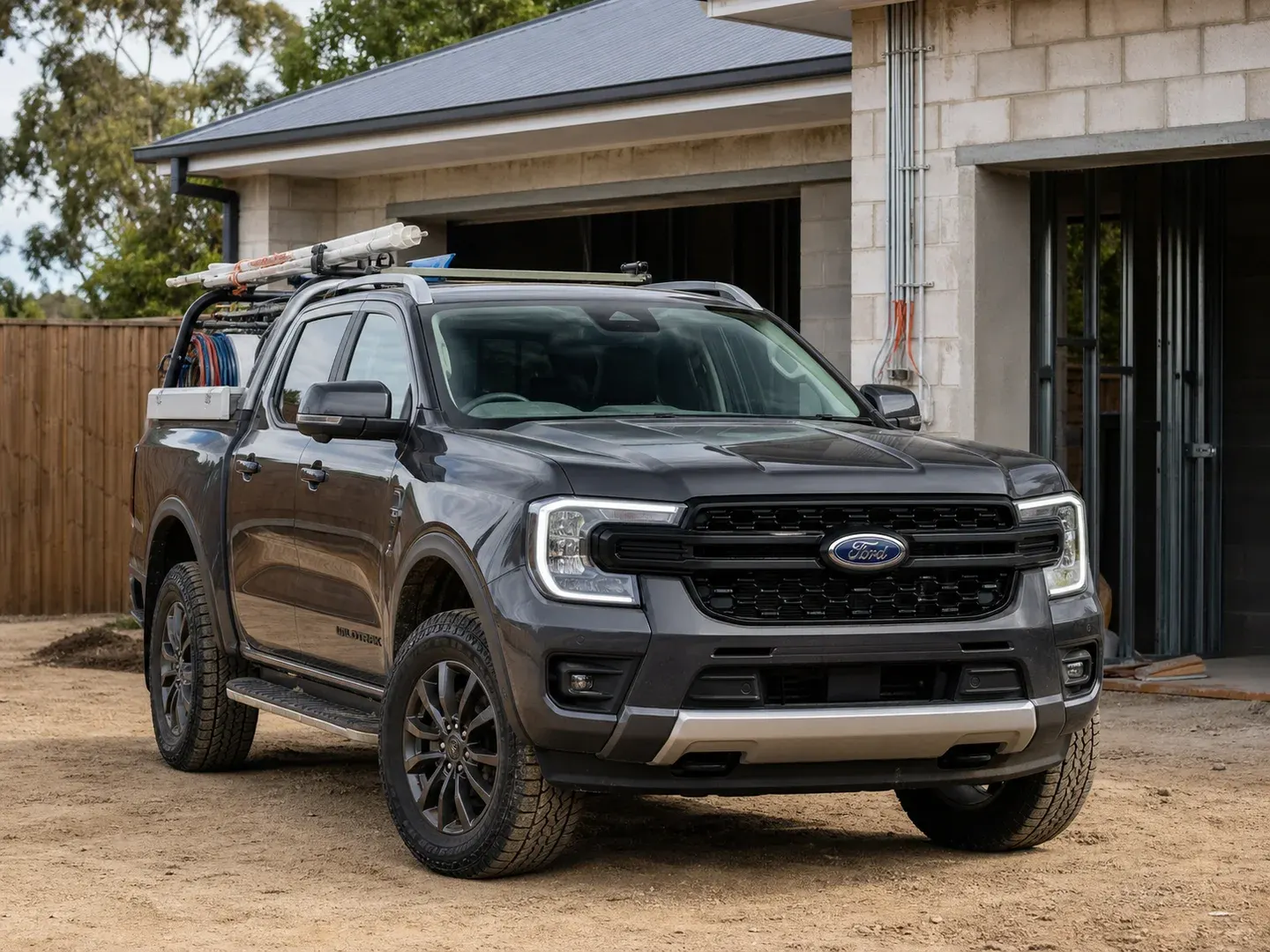 Business ute finance · Penrith, NSW
Approved on the first lender enquiry and settled for the full amount at a historical rate of 9.4%, with no deposit, before the new contract started.
Historical customer outcome. Vehicle and business images are illustrative.
Find out what’s possible for you.
Get my free quoteLenders each set their own bar, that's why we compare 80+ of them, but for a work ute most look at the same things.
Some lenders want a longer trading history; others will look at a newer ABN with industry experience or a deposit behind it. We move the deal to the lender whose policy actually fits.
A small paper default from a flat out period doesn't have to end it. Some lenders will look past an explained default, especially with clean conduct since.
If the bank statements undersell the business, we look at lenders that accept accountant prepared figures or take a low doc view of an established ABN.
Age caps differ between lenders and commonly use the ute's expected age at the end of the term. A shorter term or a different lender's policy can bring the same ute inside the limit.
A lender wants to know what the ute is, what it will do for the business, how long it should remain useful and whether the repayments are affordable. The details below explain the usual checks and what can help support the application.
Your broker handles the lender comparison and paperwork for ute finance, keeping you informed at each step.
Tell us what you want to finance, how much you need and when you need it. That could include dual cab utes for the crew.
We help organise driver licence and ABN and GST registration details and check ABN age and GST registration, many lenders prefer an established ABN, though newer businesses have options too to find lenders that fit your situation.
We explain chattel mortgage and finance lease, including the full cost and how repayments fit your budget. You choose the option to take forward.
Your broker coordinates lender conditions, signed documents and payment details, so you can focus on what comes next.
Your broker reviews your enquiry and explains the next steps, usually within one business day. An enquiry does not create a credit check or an obligation to proceed.
Many work utes use a chattel mortgage. Other structures may suit different cash-flow positions, tax circumstances and accounting advice.
The go to for work utes. You own the ute from day one, the lender takes security over it, and you may be able to claim GST on the purchase and depreciate it against the business, your accountant can confirm what applies to you.
The lender owns the ute and you lease it for the term, with options to buy, extend or hand back at the end. Suits businesses that like predictable payments and regular upgrades.
You pay the ute off over the term and ownership transfers with the final payment. Occasionally the better fit depending on your accounting treatment.
A lump sum left to the end of the term lowers the monthly repayment. Balloon sizes typically depend on the lender, the term and the ute's age, we'll show you the repayment with and without one.
Established ABNs can often go low doc without financials, while newer businesses usually go full doc with financials or BAS. Terms typically run one to seven years either way, we'll tell you which path your file reads best on.
Many ute deals allow a zero-dollar deposit. A contribution can sharpen the rate or bring a borderline application inside policy, and the customer chooses whether that suits the available cash.
Swipe across the table to compare all columns.
| Option | During the loan | At the end |
|---|---|---|
| No balloon | Higher regular repayments than the same loan with a balloon; the balance reduces faster | The scheduled loan balance is repaid when all payments have been made. |
| A balloon payment | Lower regular repayments, but interest is charged on a larger outstanding balance | A lump sum remains due. Budget for it rather than assuming resale or refinancing will cover it. |
| A shorter term | Higher regular repayments may reduce total interest on otherwise equal terms | Check affordability alongside the total amount repaid, fees and any payout costs. |
Use the calculator to compare the same amount, rate and term with and without a balloon. Refinancing requires a new assessment and is not guaranteed.
Start with payload, towing, access and expected ownership period, then compare the regular repayment with the complete cost.
Trays, canopies, toolboxes, racks and towing equipment may need separate pricing and may not all form part of the lender's security value.
Explain the jobs, tools, team or towing requirement the ute supports without making assumptions about tax treatment.
It can reduce scheduled repayments but leaves more principal for the end or trade-in.
Verify VIN, seller, registration and release of any existing finance before settlement.
Kilometres, towing use, payload, off-road work, service history and body condition influence useful life and resale value. In practical terms, this can change the deposit required, how long the loan can run and which lenders will consider the asset.
Tyres, suspension, brakes, servicing and replacement cycles form part of the total operating budget. These costs need to fit beside the repayments. The loan should also finish within the period the asset is expected to remain useful to the business.
Trade contracts, job schedules and head contractor agreements can show how the ute supports travel, tools and site work. Contracts, purchase orders and confirmed work can help show how the asset is expected to earn money and when customers are expected to pay.
If the ute supplier needs a deposit, progress payments and a final payment, list each date and amount. This lets the lender reconcile the full purchase cost and arrange the payment stages correctly.
Illustrative examples of how we approach ute finance.
The business has a shorter ABN history and confirmed work that requires the ute.
We identify lenders that can assess recent account history, industry experience and contracted work, then present the purchase as one complete operating proposal.
Business bank statements, GST registration, signed work agreements, the supplier quote and evidence of the operator's experience.
The chosen asset has material age, hours or kilometres and remains suitable for the work ahead.
We document condition, service history, specification and resale support, then compare lenders whose end-of-term age policy fits the proposed term.
Service records, inspection details, serial or VIN information, photographs, the invoice and a clear explanation of expected annual use.
Current work supports the purchase while the latest full-year accounts are still being prepared.
We list the documents already available, current debts and expected payment timing, then compare lenders that accept that evidence.
Recent bank statements, BAS, management accounts, an accountant letter, contracts, purchase orders and a schedule of existing finance.
At X Lend, we start by matching the funding term to the job the money or asset needs to perform. We then identify the documents and policy issues, choose a suitable lender and ask the customer to approve one considered submission.
Let’s compare your options.
Get my free quoteSee how arranging finance compares with waiting or paying the full cost upfront.
Put the ute needed for suitable work into service without waiting to fund the full cost from cash.
Preserve working capital for wages, materials and tax while arranging the ute.
Replace an unreliable or unsuitable ute before downtime and repair costs increase.
Suitable contracts may be missed when the required ute is not available.
An older ute can keep creating downtime or repair costs while its replacement is delayed.
Buying the ute outright can reduce the cash buffer available for payroll, materials and unexpected costs.
Corey was excellent to deal with. He was able to get me a better rate than everyone else, he was very responsive, worked quickly and made the process very easy, even with me asking a million questions. I would definitely use him again next time.
I can’t recommend Corey from X Lend highly enough. From the very first conversation, he was professional, transparent, and genuinely focused on finding the best outcome for me. Corey took the time to explain every step of the finance process in a way that was easy to understand, answered all my questions promptly, and never once made me feel rushed or pressured. I really appreciated how proactive he was, keeping me updated, following up with lenders, and making sure everything stayed on track. What really stood out was how hard he worked to secure a great deal. He compared multiple lenders, negotiated on my behalf, and ultimately achieved a rate and repayment structure that exceeded my expectations. The whole process of purchasing my car was smooth and stress‑free thanks to their expertise. If you’re looking for someone knowledgeable, reliable, and genuinely in your corner, I wouldn’t hesitate to recommend them. I’ll definitely be using their services again in the future :)
Corey helped me through the entire process of getting my dream family car! He was extremely prompt with his responses and had everything organised quickly and smoothly. I made a huge mistake by settling finance on the wrong car (a 5‑seater instead of a 7‑seater), but Corey was incredibly understanding and supportive. He contacted the dealership, lender, and even rearranged my insurance for me. He did all of this without ever making me feel like a hassle, even though I knew I was being a pain! Despite the setback, Corey stayed fast and efficient, kept me confident throughout the process, and managed to get everything cancelled and re‑approved for a higher amount so I could get my actual dream car. I highly recommend Corey. He speaks to you like a friend and genuinely has your best interests at heart. I already had quotes from Toyota Finance and Toyota Insurance, and Corey was able to get both significantly cheaper. Toyota Finance even reviewed Corey’s figures and confirmed they couldn’t beat them. I will never look to another finance company again.
Let us help with
ute finance.
The details you want to know before taking the next step.
We're a finance broker: we compare 80+ banks and nonbank lenders and place your ute finance with the best fit for your business.
For most tradies and sole traders, yes. A chattel mortgage means you own the ute and finance it against the business, with potential GST and depreciation benefits. We'll explain how it works so you can confirm it with your accountant.
Often, yes. Established ABNs can frequently access low doc options without full financials. We match you to lenders comfortable with your trading history.
Yes. We arrange finance for used and private sale utes, handling the checks and payout so the deal settles cleanly.
Many ute deals get a decision the same day and settle within 48 to 72 hours once your documents are in.
Yes, mixed use is normal. For commercial finance, lenders generally want the ute to be predominantly for business. The business use percentage also matters for what you can claim, so it's worth keeping a record of how the ute is used and letting your accountant confirm the split.
It can, under a chattel mortgage you own the ute from day one, which is generally what asset write off rules look at. Eligibility rules and thresholds change, though, so talk to your accountant about what applies to your business before you rely on it.
Often, yes. Where the accessories sit on the dealer invoice, many lenders will finance the whole drive away setup, canopy, tow bar, racks and all, in the one facility.
Absolutely, sole traders make up a big share of the ute deals we arrange. You'll need an ABN and mainly business use of the ute, and established sole traders can often go low doc without full financials.
Common examples include Toyota HiLux, Ford Ranger, Isuzu D-Max, Mitsubishi Triton, Nissan Navara, Mazda BT-50. This is not a restricted list: the lender will still look at the exact item or purpose, the amount requested and your circumstances.
A lender may ask for vehicle and body quotes, ABN details, bank statements, BAS, trade licence, work contracts. You may not need everything on that list. X Lend confirms what applies before anything is submitted.
For ute finance, we first confirm the transaction, timing and available evidence. We then explain the issues that matter, compare lenders whose rules fit those facts and show the proposed option before any application is submitted.

Reviewed by Corey Marino
FBAA member M-354085 · Diploma-qualified finance broker · Last reviewed 24 August 2026